
_Greg_MacVean_(3).jpg)
Marine Protected Areas
Scotland is a global stronghold for seabirds. With more than 60% of the UK’s seas, over 18,000km of coastline, and around 900 islands, Scotland’s marine environment provides important habitat for over 5 million breeding seabirds.
Safeguarding our incredible seabirds and the delicate ocean ecosystems they depend on is essential. Establishing protected areas to look after important habitats and species is a key solution to protect and restore nature.
Scotland currently has a network of 243 Marine Protected Areas (MPAs) covering approximately 37% of Scotland’s seas, including 233 which are designated for nature conservation. However, many of these MPAs fall short of providing meaningful protection, and far greater ambition is needed to truly safeguard Scotland’s seas.
What are MPAs?
MPAs are areas of the sea where some human activities are restricted to protect and enhance important or vulnerable marine species, habitats or ecosystems. They are a conservation tool widely used around the world!
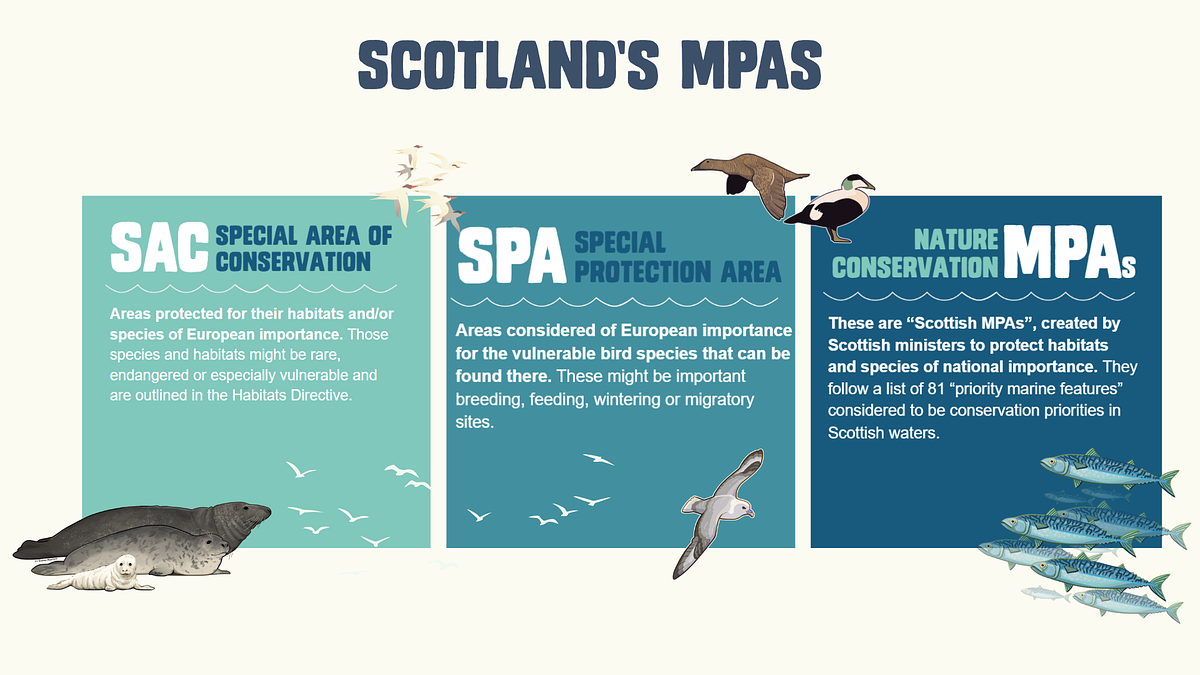
In Scotland, there are many different types of MPAs set up to protect marine species and habitats. One specific type of MPA, called a Special Protection Area (SPA), is designed to protect seabirds. SPAs focus on vulnerable and migratory seabird species that rely on Scotland’s seas for feeding or breeding along its shores.
Why are they important?
If properly managed, MPAs can help safeguard the benefits provided by the ocean, making them a vital part of our response to the Climate and Nature crisis. Our seas are the regulator of the planet’s climate, absorb carbon and produce more than half the oxygen we breath. Marine ecosystems also provide food, medicine, and protection from storms and coastal erosion.
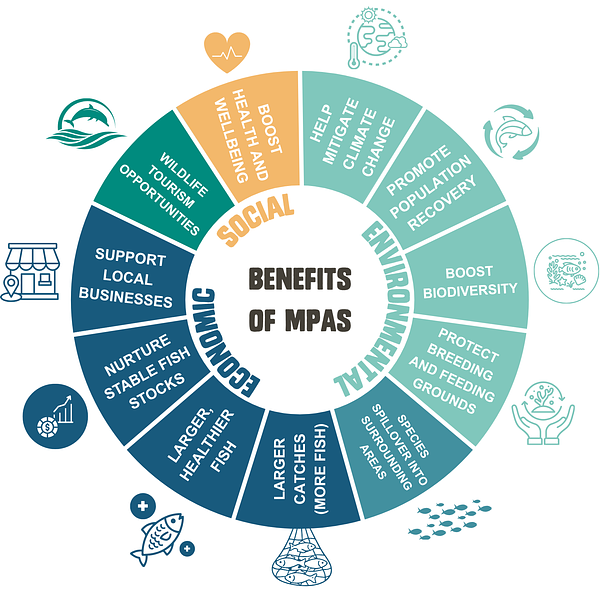
By restricting or preventing damaging activities, MPAs provide safe havens where marine life can recover and ecosystems can function more naturally. Marine wildlife, such as fish species, can live longer, grow larger and increase in number. They can naturally flow out of these zones where they are allowed to flourish and into the surrounding waters, boosting fish stocks and overall biodiversity.
MPAs also play a key role in facing climate change. By protecting habitats such as seagrass meadows or seabed sediment, they help to capture carbon from the atmosphere and prevent it from being released back.
MPAs are not just good for the planet, they are great for people too! They can support local economies such as fisheries and tourism. They provide perfect spots for recreational activities such as snorkelling, or wildlife watching, giving us a chance to connect with nature and boost our mental and physical health. Scientists also use MPAs as living laboratories to study marine life and test conservation strategies, helping to improve ocean management worldwide.
Can MPAs protect seabirds?
Protecting seabirds is no easy task. Many species breed in dense colonies on cliffs or islands for only a few months of the year and spend most of their lives ranging widely across the ocean.
However, Marine Protected Areas (MPAs) can play a vital role in safeguarding key breeding sites, nearby foraging grounds and important feeding hotspots during sensitive life stages.
But protection on paper alone is not enough. In Scotland, many MPAs are not effectively monitored or enforced, limiting their effectiveness. In addition, some sites still permit highly damaging fishing practices, including bottom-trawling. These limitations undermine their ability to fully protect our seabirds and seas.
Did you know?
We have marine protected areas on our doorstep!
- The Firth of Forth Banks Complex MPA is located off the coast of North Berwick. It protects the sandy/gravel habitats as well as sandeels (Puffin’s favourite meal)
- The Outer Firth of Forth and St Andrews Bay Complex SPA
- Bass Rock and the other Forth islands such as Inchmickery, Isle of May, Fidra, The Lamb, Craigleith, and Long Craig are recognised as exceptional sites for seabirds and are part of the Forth Islands SPA.
- In addition, the Bass Rock is designated as a Site of Special Scientific Interest (SSSI)
Header image: @Greg MacVean
Thumbnail image: @Susan Davies